
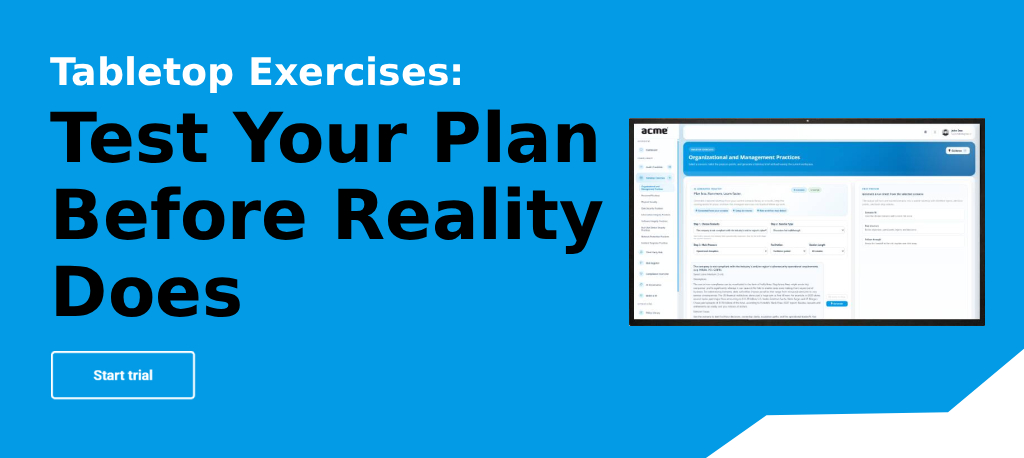
Most organizations have an incident response plan. Far fewer have actually tested it.
When ransomware, phishing, cloud outages, or data breaches happen, the difference between a contained issue and a major business disruption often comes down to whether the team has practiced what to do.
What a Tabletop Exercise Tests
A tabletop exercise is a structured discussion built around a realistic cybersecurity or operational scenario. Rather than testing technology, it tests people, communication, decision-making, and documented procedures.
- Incident response and contingency planning
- Communication flows and escalation paths
- Executive decision-making
- Vendor and third-party coordination
- Business continuity and disaster recovery readiness
- Documentation of lessons learned and corrective actions
Why Frameworks Care
HIPAA expects organizations to evaluate and validate security and contingency planning. NIST CSF 2.0 emphasizes continual improvement and readiness. ISO/IEC 27001 also expects incident management and continuity processes to remain effective.
Tabletop exercises are one of the clearest ways to show those procedures have been exercised in practice instead of simply documented.
What Organizations Usually Learn
Even mature teams often discover unclear ownership, outdated contacts, missing vendor communication steps, unverified recovery assumptions, and gaps in audit evidence. Finding those issues during an exercise is much cheaper than finding them during a real incident.